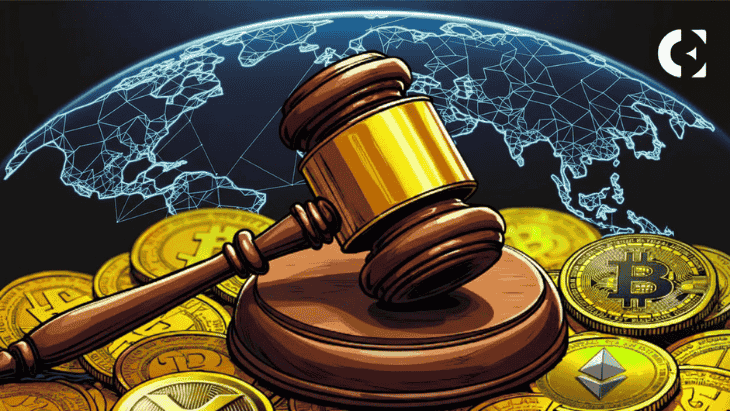
Ghana has entered a new phase in its relationship with digital finance. For years, digital assets like Bitcoin and Ethereum operated in a legal vacuum within the country. Transactions happened informally, through peer-to-peer networks and unregistered online platforms. Consumers had no safety net. Service providers had no clear rules to follow. Financial watchdogs had limited visibility into a rapidly expanding market. All of that changed when the government introduced and passed the 2025 Crypto Law, formally known as the Virtual Asset Service Providers Act of 2025. The legislation represents a fundamental shift in how Ghana approaches digital currency. It brings structure to a sector that had grown beyond the reach of traditional oversight, and it signals to the international community that the nation is serious about aligning with global standards for financial integrity .
The journey toward this law began years before the ink dried on the final document. Ghanaian authorities, particularly the Bank of Ghana, had long maintained a cautious distance from digital currencies. Official notices dating back to 2018 reminded the public that cryptocurrencies were not legal tender and warned financial institutions against facilitating related transactions . Yet the appeal of digital assets proved resilient. Ghanaians, like many across the African continent, turned to cryptocurrencies for reasons that included protection against currency fluctuations, lower costs for international remittances, and access to alternative investment opportunities. By the time lawmakers began serious discussions about a regulatory framework, an estimated three million Ghanaians, representing roughly 17 percent of the adult population, were already active participants in the digital asset market . The absence of regulation had not prevented adoption. It had merely pushed activity beyond the view and control of authorities, creating risks that the 2025 Crypto Law is specifically designed to address.
- 100% free
- Call direct
- Voice search
- Urdu & English
The Passage of a Landmark Bill
The legislative process that produced the Virtual Asset Service Providers Act unfolded with a clear sense of purpose. In the months leading up to the parliamentary vote, the Bank of Ghana laid essential groundwork. A mandatory registration exercise for all Virtual Asset Service Providers operating in the country was announced, requiring entities involved in exchange services, wallet provision, transfer and settlement, and the issuance or sale of digital assets to identify themselves to the central bank . This registration drive served as a census of sorts, allowing regulators to map the contours of the industry before imposing a full licensing regime. The message was unambiguous: registration was compulsory, did not constitute legal approval, and failure to comply would carry consequences.
Public consultation and engagement with state agencies followed, building toward the formal consideration of the draft bill. Parliament ultimately passed the legislation, and on December 30, 2025, President John Dramani Mahama signed it into law . The signing ceremony was more than a procedural step. It confirmed that the state was ready to recognise digital asset trading as a lawful activity within a structured environment. Bank of Ghana Governor Johnson Asiama spoke directly to the public when he declared that virtual assets trading was now legal and that individuals would no longer face arrest for engaging in it . That statement addressed years of uncertainty. Previously, market participants operated in a grey zone, unsure whether their everyday transactions might attract legal consequences. The new law removed that ambiguity while simultaneously imposing a detailed system of rules designed to protect everyone involved.
The legal recognition of cryptocurrency trading does not elevate digital assets to the status of legal tender. The Ghanaian Cedi remains the sole official currency of the nation. What the law provides instead is a clear definition of permissible activities involving virtual assets and a pathway for businesses to offer related services under the supervision of designated regulatory authorities. The scope of the legislation is broad, covering exchanges, trading platforms, wallet providers, token issuers, investment advisors, brokerages, and even activities related to virtual asset mining and validation when connected to securities .
Who Regulates What Under the New Framework
The architecture of oversight established by the 2025 Crypto Law divides responsibility between two principal institutions. The Bank of Ghana assumes the role of primary regulator for activities connected to payment systems, settlement services, and stablecoins that function as digital representations of value for transactional purposes. The Securities and Exchange Commission (SEC) takes charge of market-facing services, including exchanges, custodial wallet provision, token issuance, and investment-related activities such as virtual asset exchange-traded funds, asset management, and brokerage .
This dual-regulator model reflects an understanding that the digital asset sector straddles different domains of financial activity. A virtual currency used primarily as a means of payment engages the central bank’s mandate over monetary stability and payment infrastructure. A digital token that represents an investment contract falls more naturally under the SEC’s responsibility to protect investors and maintain fair, transparent markets. The law also allows the Minister of Finance to designate additional regulatory bodies as needed, providing flexibility to adapt the framework as the industry evolves.
The SEC issued a formal press release on December 29, 2025, confirming the scope of its licensing authority. The list of activities it will regulate includes virtual asset exchanges, trading platforms, issuance, tokenization, exchange-traded funds, asset management, investment advice, brokerage, and advocacy related to securities, as well as mining and validation services connected to securities and sandbox environments for innovative business models . The Commission pledged to work alongside the Bank of Ghana to issue detailed guidelines and regulatory instruments that would bring the Act into full operational effect. These guidelines will specify licensing procedures, capital and solvency requirements, governance standards, risk management protocols, and customer protection measures.
The timeline for full implementation is phased. A roadmap published by the Bank of Ghana indicates that the mandatory registration portal launched in mid-2025, followed by industry consultation, parliamentary deliberation, and the passage of the Act in late 2025. Public awareness campaigns began in late 2025 and are expected to continue into early 2026. From March 2026, regulators plan to begin the phased operationalisation of the Act, including the commencement of formal licensing and registration for market participants . This sequenced approach is intended to give both regulators and industry sufficient time to prepare for the new requirements.
Targeting Fraud and Financial Crime
A defining feature of the new legislation is its emphasis on combating fraud and enforcing anti-money laundering standards. The rapid growth of digital asset usage in Ghana brought genuine financial innovation, but it also attracted bad actors. Scams proliferated. Unregulated platforms made bold promises and disappeared with customer funds. Because transactions occurred outside formal channels, victims had little recourse. The 2025 Crypto Law aims to change this by imposing stringent compliance obligations on all licensed Virtual Asset Service Providers.
Providers must now implement know-your-customer protocols, verifying the identities of individuals who use their platforms. They must monitor transactions for suspicious activity and report findings to the relevant authorities. Records must be maintained and preserved, creating an audit trail that can support investigations into illicit finance. These requirements align with the standards set by the Financial Action Task Force, the intergovernmental body that establishes global recommendations for combating money laundering and terrorist financing. Ghana’s decision to embed these standards into domestic law is significant. It demonstrates a commitment to meeting international expectations at a time when non-compliance can result in reputational damage and restricted access to global financial networks .
The Financial Stability Review published by Ghanaian authorities in 2025 highlighted the dual nature of digital asset growth. On one hand, the technology offered opportunities for financial inclusion and economic dynamism. On the other, it introduced vulnerabilities, including potential challenges to anti-money laundering and counter-terrorist financing compliance. The review warned that unregulated crypto activity could expose the financial system to fraud, illegal capital flows, and exchange rate pressures . The new legal framework is the government’s direct response to those warnings. By pulling digital asset transactions into the regulated sphere, authorities gain the ability to monitor, investigate, and deter financial crime.
The law also addresses consumer protection in more direct ways. Licensing requirements force providers to meet minimum standards of operational integrity. The Bank of Ghana and the SEC are empowered to supervise ongoing conduct and to take enforcement action when firms breach their obligations. For the average user, this means that a licensed platform operating under the 2025 Crypto Law is subject to rules that an unlicensed peer-to-peer arrangement was not. It does not eliminate all risk, but it does create accountability where none existed before.
Why the Reform Matters for Ghana
The introduction of formal digital asset regulation in Ghana carries implications that extend well beyond the financial sector. The informal crypto market in the country was previously estimated to handle around three billion dollars in annual activity . This volume of transactions generated no direct tax revenue, offered no systemic protections, and created no structured pathway for integrating digital finance with broader economic development goals. By formalising the sector, the government creates the potential for the Ghana Revenue Authority to track capital gains and service fees, thereby improving the national tax-to-GDP ratio. This does not mean that users will face punitive taxation from day one, but it does establish the legal basis for a fair contribution from an industry that benefits from participation in the national economy.
The reform also positions Ghana alongside other African nations that are moving to regulate digital assets. Nigeria passed its Investment and Securities Act in 2025, and Kenya enacted its own comprehensive VASP legislation. Morocco, which previously banned crypto activity outright, has published a draft law to license service providers . Across the continent, policymakers are recognising that digital currencies are not a passing phenomenon to be suppressed but a permanent feature of the financial landscape that requires prudent oversight. Ghana’s approach is notable for its balance. It does not impose an outright ban, nor does it grant unrestricted freedom. It charts a middle path that seeks to capture the benefits of innovation while managing the risks.
For the fintech sector, the clarity provided by the new law could prove transformative. Entrepreneurs and developers previously navigated uncertainty about the legality of their products. International investors often hesitated to back ventures that existed in a regulatory grey zone. With a clear licensing framework now in place, the environment for building and funding compliant digital asset businesses improves. The SEC’s inclusion of a sandbox provision is particularly relevant here. It signals a willingness to allow experimentation within a supervised space, giving innovators room to test new models before full regulatory obligations attach. This could encourage the development of locally tailored blockchain applications that address genuine Ghanaian needs in areas like remittances, micro-savings, and supply chain transparency.
Cross-border remittance flows stand to benefit as well. Ghana, like many nations with a significant diaspora population, receives substantial sums from citizens working abroad. Traditional remittance channels can be slow and expensive, with fees that erode the value that reaches recipients. Digital assets offer a potential alternative route for moving value across borders. By bringing licensed providers into the fold, the law may help lower the cost of remittances and increase the speed of settlement, provided that the regulatory burden does not itself become a barrier. The Bank of Ghana’s roadmap indicates that it is mindful of this balance, emphasising its commitment to fostering financial innovation alongside stability .
Implementation and the Road Ahead
The passage of legislation is an achievement, but it is only the beginning. Effective implementation will determine whether the 2025 Crypto Law delivers on its promise. Regulators face the substantial task of building the administrative capacity to assess licence applications, conduct ongoing supervision, and enforce rules against entities that may operate from jurisdictions beyond Ghana’s direct reach. Decentralised platforms, which by their nature do not have a central point of control, pose a particular enforcement challenge. A global exchange headquartered in a distant country may not voluntarily submit to Ghanaian oversight, and coercive measures are limited in cyberspace. The Bank of Ghana and the SEC will need to develop cooperative relationships with international counterparts and invest in technological tools that allow them to monitor blockchain activity effectively.
Public education is another critical component. Millions of Ghanaians use digital assets, and many may not fully understand their rights and responsibilities under the new regime. The Bank of Ghana’s roadmap includes nationwide public awareness campaigns spanning television, radio, and community outreach from late 2025 into early 2026 . These efforts will need to reach beyond urban professionals to include populations in rural areas and those with limited digital literacy. Consumers must learn how to verify whether a platform is licensed, what protections they can expect, and how to report concerns. Without broad public understanding, even the best-designed regulatory framework will leave gaps that fraudsters can exploit.
The law’s success also depends on the responsiveness of the market itself. Licensed Virtual Asset Service Providers will incur compliance costs. They will need to invest in anti-money laundering systems, customer verification processes, and reporting infrastructure. Some firms may decide that the cost of compliance outweighs the benefit of operating in Ghana, potentially reducing choice for consumers in the short term. Regulators will need to calibrate their requirements carefully to ensure that safety and soundness do not become insurmountable barriers to entry that stifle competition. The sandbox mechanism and phased implementation timeline suggest an awareness of this tension, but the practical outcome will only become clear as licensing begins in earnest.
The coordination between the Bank of Ghana and the SEC is itself a subject of importance. Dual regulation carries the risk of overlap, inconsistency, or gaps where neither authority takes full ownership of an issue. The law provides for joint rule-making, and both institutions have publicly committed to close collaboration . A new Virtual Assets Regulatory Office has been proposed to coordinate oversight across the central bank, the capital markets authority, financial intelligence agencies, and tax authorities . The effectiveness of this coordinating body will influence whether the regulatory experience is coherent and predictable for market participants.
A Changing Landscape for Ghanaian Users
For the individual Ghanaian who has been buying, holding, or trading digital currencies, the 2025 Crypto Law brings significant changes. The most immediate shift is psychological. Activity that once carried the vague threat of legal jeopardy is now officially permitted. A student receiving Bitcoin from a relative abroad, a small business owner using a stablecoin to pay a supplier, or a young professional investing in Ethereum as a long-term savings vehicle can do so without fear of breaking the law. This normalisation matters. It allows conversations about digital assets to move from whispered uncertainty into open discussion about risks, opportunities, and best practices.
With normalisation comes increased responsibility. Users will be expected to transact through licensed providers when they engage with third-party services. Peer-to-peer trading between individuals may continue, but the ecosystem will increasingly gravitate toward platforms that have secured regulatory approval. Those platforms will ask for identification documents and may impose limits on certain types of transactions. The anonymity that characterised the early days of crypto in Ghana will diminish in the regulated space, replaced by the transparency that anti-money laundering rules demand. Some users may view this as an unwelcome intrusion. Others will accept it as the price of legitimacy and protection.
The law also opens the door to new categories of service. Regulated virtual asset exchange-traded funds, for instance, could allow Ghanaians to gain exposure to digital assets through investment products offered by licensed fund managers. Tokenised securities could enable fractional ownership of real estate or other assets, broadening access to wealth-building opportunities. Virtual asset advisory services could help individuals and institutions navigate complex decisions about portfolio allocation and risk management. These possibilities depend on the development of a robust and trustworthy market, which the regulatory framework is designed to foster.
External observers are taking note. Financial institutions that previously avoided any association with crypto may begin to explore partnerships with licensed VASPs, knowing that a legal framework now exists to govern such relationships. International investors assessing African fintech opportunities may add Ghana to their list of markets with a viable regulatory environment. The nation’s approach could serve as a model for other countries in the region that are still wrestling with how to handle digital assets.
The year ahead will be revealing. As regulators issue detailed guidelines and begin processing license applications, the shape of Ghana’s formal digital asset market will come into focus. Challenges are inevitable. Some rules may prove too burdensome. Some providers may attempt to circumvent requirements. Some frauds may still occur despite new safeguards. The test will be whether the system adapts and improves over time, learning from early experiences to become more effective without becoming overly restrictive.
The 2025 Crypto Law represents Ghana’s answer to a question that every nation must now confront: how to respond to a technology that transcends borders, empowers individuals, and challenges traditional concepts of money and intermediation. The answer Ghana has given is neither a blind embrace nor a fearful rejection. It is a deliberate attempt to build guardrails that allow innovation to proceed while keeping the public interest at the centre. The law does not claim to solve every problem. It does claim to establish a foundation on which a safer, more accountable digital asset sector can be built. Whether that foundation proves solid will depend on the diligence of regulators, the cooperation of industry, and the engagement of the Ghanaian people who stand to benefit from a financial system that works for everyone.