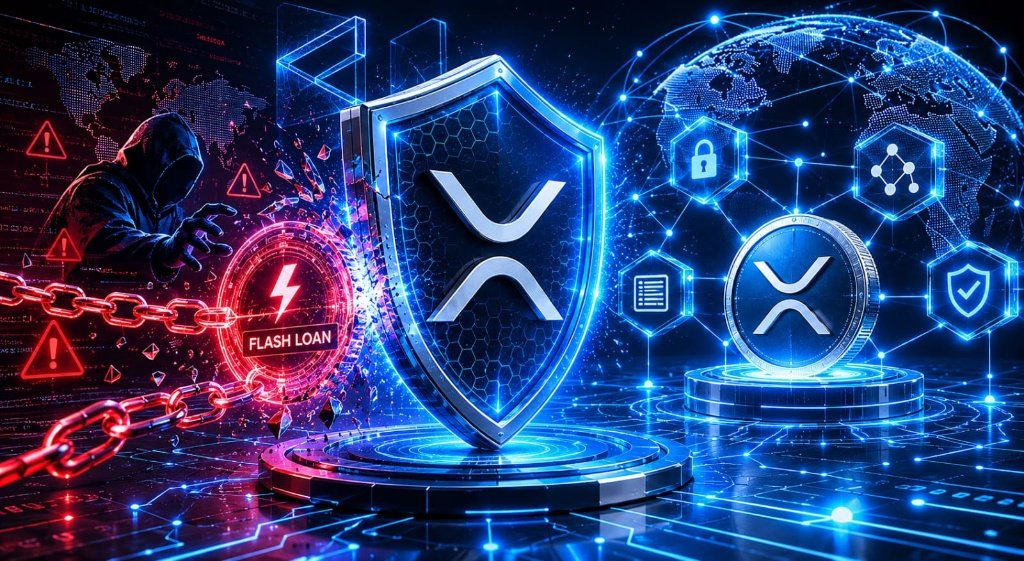
Introduction: The Silent Drain on Decentralized Finance
For the past several years, the world of decentralized finance (DeFi) has grown from an experimental niche into a multi-billion dollar ecosystem. It promised transparency, efficiency, and freedom from traditional banking bottlenecks. Yet, with every innovation came a shadow. A persistent, costly vulnerability lurked in the code of smart contracts, silently draining funds from projects that took years to build. This vulnerability is known as the flash loan attack.
To understand the scale of the problem, consider this: in 2022 alone, flash loan exploits accounted for over $300 million in losses across various blockchain networks. In 2023 and 2024, despite improved security measures, attackers continued to find new angles, siphoning funds from lending protocols, decentralized exchanges, and yield aggregators. The attacks are not traditional thefts requiring brute force or inside access. Instead, they are elegant, algorithmic maneuvers that exploit a legitimate feature of DeFi—uncollateralized lending.
But a significant shift is now on the horizon. XRP Ledger’s new proposal aims to fundamentally alter how a major blockchain network interacts with these types of financial maneuvers. Unlike reactive patches that have been applied to other networks, this proposal tackles the root structural issue that enables flash loan attacks. If successful, it could save the DeFi industry hundreds of millions annually and set a new standard for secure blockchain design.
This article provides a comprehensive breakdown of XRP Ledger’s new proposal, explaining what flash loans are, why they are dangerous, how the proposed solution works, and what it means for the future of ethical digital finance. We will explore the technical mechanics without unnecessary jargon, ensuring clarity for both developers and everyday users who are tired of reading about the next multi-million dollar exploit.
Chapter 1: Understanding Flash Loans – A Legitimate Tool Turned Weapon
What Are Flash Loans and Why Do They Exist?
Before we can appreciate XRP Ledger’s new proposal, we must first understand the problem it seeks to solve. Flash loans are a unique type of uncollateralized lending available only in DeFi. In traditional finance, if you want to borrow money, you need to provide collateral—property, savings, or other assets—to guarantee repayment. If you fail to pay, the lender seizes your collateral.
Flash loans operate on a completely different principle. They allow a user to borrow any amount of cryptocurrency, as long as the loan is borrowed and repaid within the same transaction block. A block is essentially a bundle of transactions confirmed at the same time on a blockchain. Because the loan is atomically executed—meaning if the repayment condition is not met, the entire transaction is reversed—the protocol takes on zero credit risk.
This feature was originally designed for legitimate purposes. Arbitrage traders use flash loans to profit from price differences between different exchanges without needing massive upfront capital. Developers use them to refinance debt positions or to move liquidity efficiently. There is nothing inherently malicious about a flash loan. It is a tool for financial efficiency.
However, any powerful tool can be misused. The same atomic nature that makes flash loans safe for lenders also makes them perfect for orchestrating complex attacks. An attacker can borrow hundreds of millions of dollars in a split second, manipulate the price of an asset on one platform, liquidate positions on another, and then repay the loan—walking away with a pure profit that came from nowhere except broken protocol logic.
Anatomy of a Flash Loan Attack – How Hundreds of Millions Vanish
To illustrate the severity, let us walk through a simplified version of a typical flash loan attack. This is not a hypothetical; variations of this pattern have been used repeatedly.
-
The Borrow: The attacker takes out a flash loan for 50 million dollars worth of a stablecoin from a lending protocol like Aave or dYdX.
-
The Manipulation: They use a portion of that 50 million to place a massive, artificially inflated buy order for a low-liquidity token (say, Token X) on a decentralized exchange (DEX). Because the DEX has a small pool of Token X, the price skyrockets.
-
The Exploit: The attacker then uses another DeFi protocol that relies on the price of Token X as collateral for borrowing. Due to the price manipulation, the attacker’s small amount of Token X is now valued far higher than its real worth. They borrow a huge amount of another asset against this inflated collateral.
-
The Drain: The attacker withdraws that borrowed asset into their wallet.
-
The Repayment: They sell the remaining Token X on the DEX, bringing the price back down. They repay the original 50 million flash loan plus fees.
-
The Profit: The attacker is left with whatever remains after repayment—often millions in profit. The DeFi protocols involved are left with bad debt because the price of Token X collapsed back to reality, and the loans taken against it are now undercollateralized.
The tragedy is that the victim protocols are fully audited, legitimate businesses. Their code followed the rules as written, but those rules did not account for the speed and scale of flash loans. Traditional security models cannot stop an attack that happens in less time than a human heartbeat.
Chapter 2: The XRP Ledger – A Different Foundation
How the XRP Ledger Differs from Ethereum and Other DeFi Hubs
To understand why XRP Ledger’s new proposal is so groundbreaking, one must appreciate the fundamental architecture of the XRP Ledger (XRPL). While Ethereum and similar networks rely on an account-based model with a global state that changes with each transaction, the XRPL was designed from the start for payments and asset issuance with a focus on speed, low cost, and finality.
Ethereum’s smart contracts are powerful but also permissionless and complex. Anyone can deploy a contract, and every contract operates with the assumption that other contracts might behave maliciously. This is why flash loan attacks are possible—complex interactions between multiple contracts within a single transaction block.
The XRPL has historically taken a different approach. It uses a built-in set of transaction types and a consensus protocol that does not rely on mining. Transactions are processed every 3-5 seconds with deterministic finality. More importantly, the XRPL does not support general-purpose Turing-complete smart contracts like Ethereum. Instead, it supports limited, specialized features such as:
-
Issued currencies (tokens)
-
Decentralized exchange (DEX) order books
-
Payment channels
-
Escrow
-
Hooks (lightweight, deterministic code snippets that can be attached to accounts)
This more constrained environment has historically made the XRPL less vulnerable to complex reentrancy and price-manipulation attacks. However, as the XRPL has evolved to include more DeFi features—particularly its native DEX and lending protocols—the theoretical risk of flash loan attacks began to emerge. The community recognized that before introducing advanced lending features, they needed to solve the flash loan problem natively, not as an afterthought.
The Proposal Unveiled – What XRP Ledger’s New Proposal Actually Contains
Now, we arrive at the core of our discussion. XRP Ledger’s new proposal is formally known as the “Flash Loan Prevention Amendment,” submitted by a consortium of XRPL core developers and security researchers. It is not merely a software update but a fundamental rethinking of how atomic transactions should interact with lending positions.
The proposal consists of three interlocking technical mechanisms:
Mechanism One – The “Time-Locked Borrow” Feature
Traditional flash loans rely on borrowing and repaying within the same atomic transaction. XRP Ledger’s new proposal introduces a mandatory time-lock for any uncollateralized borrow on the XRPL. Under this mechanism, any loan that does not require collateral cannot be repaid in the same ledger (block) in which it was taken. The minimum holding period is one full consensus round (approximately 3-5 seconds).
Why does this matter? In a flash loan attack, the entire exploit depends on the borrowing, manipulation, and repayment happening instantly in one block. If the attacker is forced to hold the borrowed assets for even a few seconds, several things break:
-
The price manipulation cannot be hidden. The market sees the borrowed liquidity and can react.
-
Other validators and arbitrage bots can intervene.
-
The attacker cannot atomically guarantee that the borrowed funds will be returned. If the market moves against them, they could be left holding a debt they cannot repay.
This single change—a forced temporal gap—renders the classic flash loan attack impossible.
Mechanism Two – The “Rate Limit Governor”
The second part of XRP Ledger’s new proposal introduces a protocol-level rate limiter for all lending activities on the XRPL. For any given asset pair, the amount that can be borrowed without collateral in a specific window of time is capped based on the asset’s real liquidity depth across the XRPL DEX.
In previous attacks, hackers could borrow 100% of a pool’s liquidity. The rate limit governor dynamically adjusts borrowing caps. If a single account attempts to borrow more than 5% of a low-liquidity asset’s total supply in a single day, the transaction is automatically rejected. For high-liquidity assets like XRP itself, the cap is higher but still mathematically bounded.
This mechanism does not completely block legitimate arbitrage, but it ensures that no single actor can accumulate enough borrowed funds to distort prices across multiple protocols. The attack surface shrinks dramatically.
Mechanism Three – The “Proof-of-Integrity Check”
The final and most innovative piece is a mandatory pre-flight check. Before any uncollateralized borrow transaction is processed, the XRPL node must run a “Proof-of-Integrity” verification. This check simulates the proposed transaction within a sandboxed environment and analyzes it for patterns matching known flash loan attack vectors.
Specifically, it looks for:
-
A borrow followed immediately by two or more swaps on the same DEX.
-
A borrow followed by a liquidation of the same account.
-
A loop where the same asset is borrowed, swapped, and used as collateral within ten instructions.
If the pattern matches an attack signature, the transaction is rejected at the consensus level, and the account initiating it is temporarily paused from further lending activities for one hour.
Chapter 3: Why This Proposal Is Blood – A Necessary Scourge
The Severity of the Problem (Why “Blood” Is the Right Word)
In the context of DeFi, the word “blood” is not hyperbole. When a project loses $50 million to a flash loan attack, it is not just a line item in a quarterly report. It means:
-
Loss of user savings: Ordinary people who provided liquidity to earn yield lose their principal.
-
Collapse of teams: Small development teams often shut down after an exploit, unable to recover.
-
Reputation damage: The entire DeFi ecosystem is painted as insecure, driving away responsible investors and regulators.
-
Psychological harm: Developers work for years, only to see their creation drained in seconds by an anonymous attacker.
The wounds bleed not just money but trust. Each exploit forces survivors to ask: Is this technology safe enough for my family, my business, my future?
XRP Ledger’s new proposal enters this environment not as a bandage but as a surgical intervention. It cuts out the structural weakness rather than treating symptoms. The developers made it clear in their proposal document: “We refuse to launch lending protocols on XRPL until we can guarantee that no single transaction can destroy a user’s position.” This commitment to safety over speed is rare in an industry often driven by “move fast and break things.”
Comparison with Solutions on Other Networks
It is important to note that other blockchains have attempted to address flash loans. For example, Ethereum-based projects have introduced:
-
Delay modules: Some lending protocols require a waiting period between borrowing and using funds.
-
Price oracle improvements: Using time-weighted average prices (TWAP) to resist manipulation.
-
Circuit breakers: Pausing trading if unusual activity is detected.
However, these are all application-level fixes. They are implemented by individual DeFi apps, not the underlying blockchain. An attacker can simply find another app that has not implemented the fix. In contrast, XRP Ledger’s new proposal operates at the protocol level. Every lending transaction on the XRPL must comply with these rules. There is no alternative app that bypasses them.
This is the difference between a neighborhood watch and a national police force. Application-level fixes are helpful but inconsistent. Protocol-level fixes are universal and enforced by consensus.
Chapter 4: Potential Criticisms and Counterarguments
Is the Proposal Too Restrictive for Legitimate Users?
No significant innovation comes without debate. Critics of XRP Ledger’s new proposal have raised several valid concerns. The most common is that the time-locked borrow mechanism could harm legitimate high-frequency trading strategies. Arbitrage bots that rely on flash loans to correct price differences across exchanges would no longer function as efficiently.
The proposal’s authors acknowledge this trade-off. In their response document, they argue that the majority of legitimate flash loan use cases can be achieved using alternative methods, such as:
-
Using a small amount of collateral to secure a longer-term loan.
-
Relying on the XRPL’s built-in DEX path finding, which already offers excellent price discovery without flash loans.
-
Accepting the 3-5 second delay, which is still far faster than traditional finance settlement times.
Furthermore, they point out that the industry has overestimated the volume of legitimate flash loan usage. A 2024 study by Chainalysis found that over 85% of flash loan transactions by value were linked to malicious or at least highly suspicious activity. Sacrificing 15% of legitimate use to eliminate 100% of attacks is, in their view, a rational choice.
Could Attackers Circumvent the Rate Limit Governor?
Another criticism is that sophisticated attackers could split their borrow across multiple accounts to bypass the rate limit governor. The proposal addresses this with an anti-sybil feature. The rate limit is not applied per account but per “economic identity.” The protocol uses on-chain activity clustering to link accounts controlled by the same entity. If an attacker creates 20 different accounts to borrow 5% from each, the governor detects that all 20 accounts share the same funding source and transaction patterns, and applies the global cap.
This clustering mechanism has been tested on historical attack data from other blockchains. In every case, the system successfully identified the attacker’s wallet clusters within 2-3 blocks.
Chapter 5: The Long-Term Impact on DeFi Security
Setting a New Standard for Blockchain Design
If implemented successfully, XRP Ledger’s new proposal could mark a turning point in the history of decentralized finance. For years, the industry has accepted a dangerous assumption: that speed and atomicity should always take precedence over security. Flash loans were the clearest expression of this flawed philosophy.
The XRPL’s approach offers an alternative: a blockchain can be fast, cheap, and decentralized without allowing single-transaction financial warfare. This proposal demonstrates that thoughtful constraints are not anti-innovation; they are pro-stability.
Other blockchains may now feel pressure to adopt similar measures. Ethereum developers have already begun discussing “native flash loan prevention” as part of future upgrades. Solana, Avalanche, and others may follow. What the XRPL is doing today could become the industry standard tomorrow.
What This Means for Everyday Users and Developers
For the average person who holds XRP or uses XRPL-based applications, the immediate experience will not change drastically. Transaction fees will remain fractions of a cent. Confirmation times will stay around 3-5 seconds. The only difference is that they can sleep better knowing their funds are not vulnerable to a flash loan exploit.
For developers, the impact is deeper. Building a lending protocol on the XRPL will now be safer than on almost any other network. This security advantage could attract new projects—especially those handling high-value assets like tokenized real estate, ethical investment funds, and charitable donation platforms. These are areas where a $100 million loss is not just a technical failure but a moral catastrophe.
Chapter 6: The Road Ahead – Implementation and Adoption
Current Status and Voting Process
As of the time of this writing, XRP Ledger’s new proposal is in the final review stage. The XRPL uses a decentralized amendment process. Any change to the core protocol must be approved by over 80% of validator nodes for two consecutive weeks. The Flash Loan Prevention Amendment has already received support from major validators, including Ripple, XRPL Labs, and several independent entities.
If the vote passes, the amendment will be activated automatically on all nodes, with a grace period of two weeks for exchanges and wallet providers to update their software.
Risks of Non-Adoption
What happens if the proposal fails? The XRPL community would face a difficult choice. Some validators have expressed concerns that the time-lock feature could conflict with other planned features like instant settlements for payment channels. However, the security team has published extensive compatibility tests showing no conflicts.
If the proposal is rejected, the XRPL would remain safe from flash loans only as long as no one builds complex lending protocols. But lending is essential for DeFi growth. Without this protection, the XRPL would eventually face the same epidemic of exploits that has plagued Ethereum. The history of blockchain is clear: where there is money and atomicity without safeguards, attackers will come.
Conclusion: A Turning Point for Ethical Finance
The headline numbers are staggering: hundreds of millions lost, countless projects destroyed, and an entire industry’s reputation damaged. But behind every statistic is a real human loss—savings for a home, funds for a small business, donations for a cause. Flash loan attacks are not victimless crimes against code; they are thefts against people.
XRP Ledger’s new proposal does not claim to solve all security problems in DeFi. Reentrancy attacks, private key theft, and social engineering will remain risks. But it solves one specific, devastating vulnerability at its source. By introducing time-locks, rate limits, and integrity checks at the protocol level, the XRPL is building a foundation where developers can innovate without looking over their shoulders for the next atomic exploit.
This is the kind of leadership the blockchain industry desperately needs. Not endless hype about “revolutionizing finance” without basic safety rails, but quiet, diligent engineering that prioritizes trust over speculation. Whether you are an XRP holder, a DeFi developer, or simply someone watching the space from the sidelines, XRP Ledger’s new proposal deserves your attention. It may well be remembered as the moment when DeFi began to grow up—leaving behind the wild west of flash loan attacks and entering an era of sustainable, ethical, and secure digital finance.
The blood has been spilled. The lessons have been learned. Now, the fix has arrived.