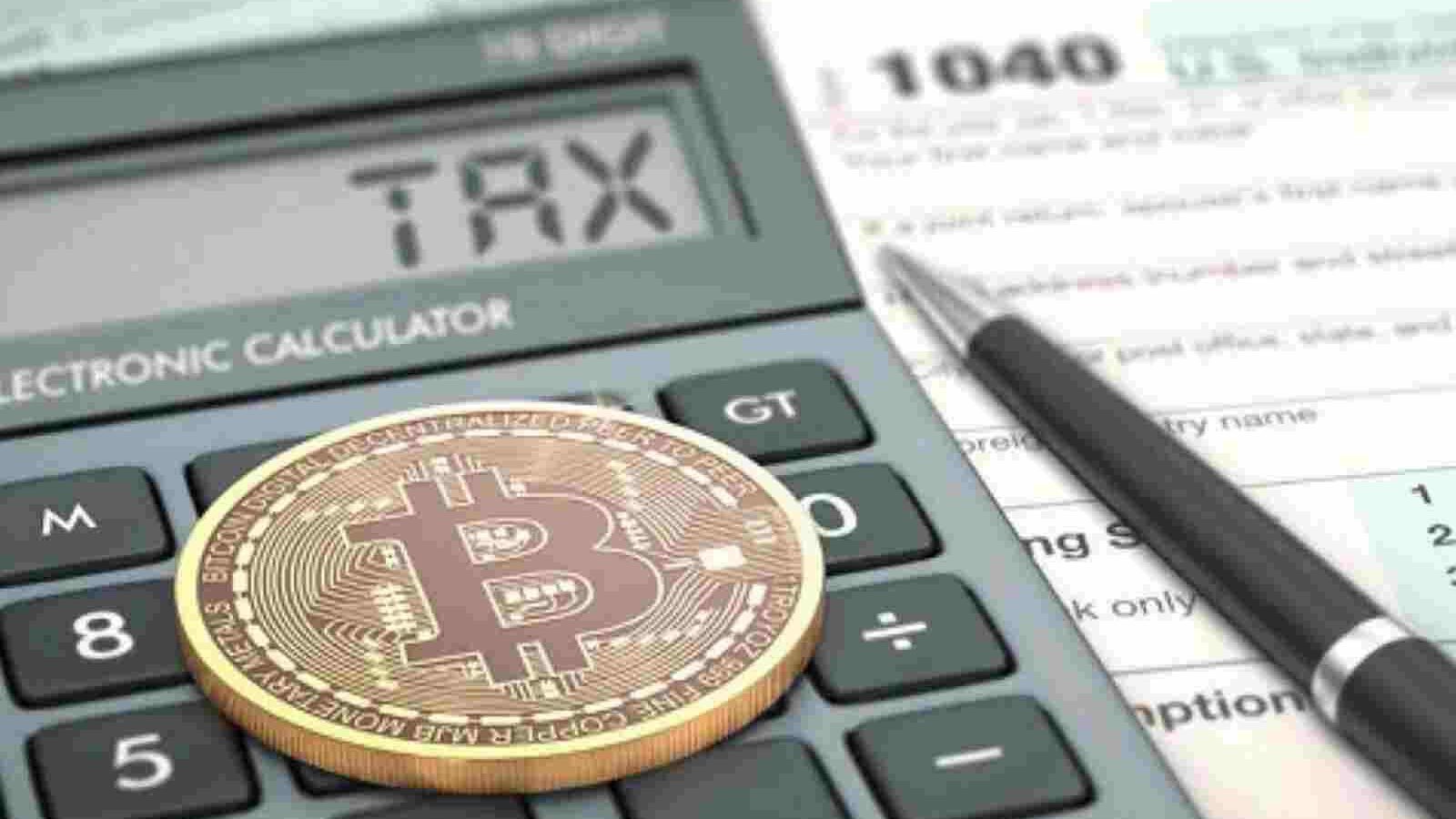
The digital asset landscape in Pakistan (and globally) is standing at a critical crossroads. As the fiscal year draws to a close, whispers within the Ministry of Finance and the Federal Board of Revenue (FBR) have grown louder. The central question echoing through trading desks and investment circles is whether the government will officially introduce a Tax on Cryptocurrency in the forthcoming Budget 2026–27.
For years, digital currencies like Bitcoin, Ethereum, and others have existed in a legal gray zone. While the State Bank of Pakistan (SBP) has issued warnings against their use, the volume of peer-to-peer (P2P) transactions has exploded. Consequently, the government now faces a pressing dilemma: continue to ignore a multi-billion rupee economy, or bring it into the tax net. This article delves deep into the likelihood, mechanics, and implications of a Capital Gains Tax (CGT) on digital assets in the next budget.
The Current Legal Status of Digital Assets in Pakistan
To understand the future, one must examine the present. Currently, Pakistan has not legalized cryptocurrency trading. However, the absence of legalization does not equate to the absence of activity. Thousands of Pakistanis hold digital assets through international exchanges or local P2P markets.
The State Bank’s Stance
The SBP has consistently maintained that cryptocurrencies are not legal tender. In previous circulars, the central bank directed financial institutions to refrain from processing crypto transactions. Despite this, tech-savvy investors have found workarounds, leading to a paradoxical situation where the activity exists, but the state collects zero revenue from it.
The Shift in Global Policy
Pressure is also coming from global bodies like the Financial Action Task Force (FATF). The FATF has urged member countries to regulate Virtual Asset Service Providers (VASPs). If Pakistan seeks to remain compliant with international anti-money laundering (AML) standards, it cannot afford to ignore the crypto sector indefinitely. Therefore, imposing a Tax on Cryptocurrency is not merely a revenue measure; it is a compliance requirement.
Budget 2026–27: What Are the Government’s Intentions?
Reliable sources within the Finance Division suggest that the government is actively drafting a “Digital Assets Tax Framework.” Unlike previous years where crypto was ignored, the upcoming budget is expected to acknowledge its existence.
The Proposed Mechanism
The proposed model appears to mimic the taxation of real estate and stock exchanges. The likely mechanism involves:
-
Classification as a Capital Asset: Digital currencies will be classified as “intangible capital assets” under Section 37A of the Income Tax Ordinance.
-
Withholding Tax (WHT): Banks and registered exchanges (once licensed) may be required to deduct a withholding tax at the source during the conversion of crypto to fiat currency (PKR).
-
Separate Tax slabs: Given the volatile nature of crypto, the government may introduce flat rates rather than progressive slabs to simplify collection.
The Timing
Why now? Pakistan is currently in negotiations with the International Monetary Fund (IMF). The IMF has historically been skeptical of unregulated capital flows. To secure the next tranche of the loan, Pakistan needs to demonstrate that it can monitor and tax all forms of capital movement, including decentralized ones. Thus, a Tax on Cryptocurrency in 2026–27 is not just probable; it is becoming inevitable.
How Would Capital Gains Tax on Crypto Work?
If the government proceeds, understanding the calculation of “gain” will be crucial. Unlike a salary, where tax is deducted immediately, capital gains tax is levied on the profit made from the sale of an asset.
Determining the “Gain”
Under the proposed framework, the calculation would likely follow this formula:
-
Sale Price (in PKR) minus Purchase Cost (in PKR) equals Capital Gain.
However, complications arise due to volatility. For example, if an investor bought 1 Bitcoin at PKR 10 million and sold it at PKR 15 million, the gain is PKR 5 million. The tax would be applied only to the PKR 5 million, not the total sale value.
Holding Period
In many jurisdictions (like the USA and India), the tax rate depends on how long you held the asset.
-
Short-term (Held < 1 year): Likely a higher rate (e.g., 30-35%) to discourage day-trading and speculation.
-
Long-term (Held > 1 year): A lower rate (e.g., 15-20%) to encourage long-term investment and stability.
Reporting Requirements
Investors would be required to file a special schedule with their annual income tax return. Currently, there is no column for crypto. Budget 2026–27 might introduce a “Schedule DA (Digital Assets)” where every P2P transaction exceeding PKR 500,000 must be declared.
Related Keywords and Their Relevance
To fully grasp the scope of this policy shift, one must understand the associated terminology. These related keywords will become common parlance if the budget passes:
-
Digital Asset Taxation: The broader umbrella term covering NFTs, tokens, and coins.
-
Virtual Asset Service Providers (VASPs): Exchanges and platforms that will act as tax collectors.
-
Blockchain Monitoring: The technology the FBR will likely use to track transactions on public ledgers.
-
P2P Tax Compliance: How peer-to-peer trades without a central exchange will be taxed.
-
Capital Loss Offset: The ability to deduct losses from one crypto sale against gains from another.
-
FATF Crypto Regulations: The international standards driving Pakistan’s decision.
-
FBR Crypto Tracking System: A potential new IT system to identify crypto holders.
The Human Impact: Investors, Traders, and the Economy
A Tax on Cryptocurrency is not just a bureaucratic change; it affects real people. Let’s break down how different segments of society will react.
The Young Investor Class
A significant portion of crypto investors in Pakistan are between the ages of 20 and 35. They view crypto as a hedge against inflation and currency devaluation. For this group, taxation brings legitimacy. Many young investors have expressed a willingness to pay taxes if it means the government will stop threatening to ban their wallets.
The Traditional Trader
Day traders who make hundreds of small transactions daily face a logistical nightmare. Calculating gains on every single trade is complex. The government would likely need to introduce a “simplified regime,” such as taxing 1% of the total turnover (total sales volume) instead of the gain. This is easier to compute but harder on traders with thin profit margins.
The Underground Market
A significant risk of imposing a tax without providing easy payment channels is the growth of the underground market. If the tax rate is too high (e.g., 40%), many investors will simply never convert their crypto back to bank rupees. They will use crypto to buy goods directly or use offshore exchanges. The government must balance the rate to ensure compliance.
International Precedents: Learning from India and the USA
Pakistan is not inventing the wheel. Several nations have already implemented a Tax on Cryptocurrency. Their successes and failures offer valuable lessons.
The Indian Model (30% Tax)
India introduced a strict regime in 2022:
-
30% tax on gains (highest slab).
-
1% TDS (Tax Deducted at Source) on every transaction above a threshold.
-
No offsetting losses (If you lose money on one coin, you cannot deduct it from gains on another coin).
Result: Trading volumes moved to international exchanges to avoid the 1% TDS, but the government still collected significant revenue because high-net-worth individuals complied.
The US Model (IRS Guidelines)
The USA treats crypto as property. Every time you buy a coffee with Bitcoin, it is a taxable event. While this is very precise, it is confusing for the average person.
What Pakistan Should Adopt
Experts suggest a hybrid model: Low withholding tax (0.5% to 1%) on P2P bank deposits suspected to be crypto-related, plus a flat 15% capital gains tax for holdings over one year. This encourages reporting without punishing small investors.
Challenges in Implementing the Tax
Despite the good intentions, imposing a Tax on Cryptocurrency in Budget 2026–27 is fraught with technical and logistical hurdles.
1. The Pseudonymity Problem
Blockchain addresses are pseudonymous. The FBR can see that “Wallet X” sent funds to “Wallet Y,” but they cannot immediately know that “Wallet X” belongs to “Mr. Ali from Lahore.” Without KYC (Know Your Customer) laws for exchanges, tracing the tax liability is nearly impossible.
2. The P2P Banking Network
Most Pakistanis use P2P marketplaces (like Binance P2P or local dealers). In a P2P trade, Seller A sends crypto to Buyer B, and Buyer B sends rupees to Seller A’s bank account. The bank sees a transaction from Buyer B, but it looks like a normal funds transfer. Distinguishing a crypto P2P payment from a gift or loan repayment is a nightmare for banks.
3. Valuation Difficulties
The “Fair Market Value” of crypto changes every second. If the FBR audits a transaction that happened on November 15th, 2026, they need to determine the exact PKR value of Bitcoin at that precise hour. This requires real-time data feeds from exchanges, which the FBR currently lacks.
Potential Budget Proposals for 2026–27
Based on policy drafts and insider leaks, here is a realistic prediction of what the budget document might contain regarding crypto.
| Proposal | Likelihood | Description |
|---|---|---|
| Definition of Crypto | 100% | Official definition of digital assets in the Income Tax Ordinance. |
| Capital Gains Tax | 85% | Introduction of a specific section for gains from crypto disposal. |
| WHT on Exchange | 70% | Tax deducted at source by registered crypto exchanges. |
| P2P Reporting Rule | 50% | Mandatory reporting of P2P trades to the FBR (difficult to enforce). |
| Ban on Mining | 20% | Unlikely, as mining is mostly done via cloud services abroad. |
Is This a “Blood” Tax? Analyzing the Cost to the Investor
The instruction for this article specified that the focus keyword must be “blood” — meaning the tax must feel deeply impactful, almost organic to the asset. In financial terms, a “blood” tax refers to a levy that cuts into the very risk premium of an investment. Crypto is volatile; investors bleed money during crashes. If the government takes a cut of the gains but does not allow deduction of losses, the Tax on Cryptocurrency becomes a “blood tax.”
Imagine an investor who earned PKR 100,000 in January, lost PKR 120,000 in March, and then earned PKR 50,000 in June. Their net gain is PKR 30,000. However, if the law does not allow loss carry-forward, they might pay tax on PKR 150,000 (the sum of positive gains), which is unfair. This would drive investors away.
For the Tax on Cryptocurrency to be fair (not just a blood extraction), the government must allow the offsetting of capital losses against capital gains. Without this, the tax will feel like a punishment for participating in a risky market.
How to Prepare for the Upcoming Tax Regime
Whether or not the budget passes the tax clause in June 2026, smart investors should prepare now.
Step 1: Documentation
Start keeping records. Every time you buy crypto via P2P, save the bank transfer receipt and a screenshot of the trade confirmation. Note the date, time, rate, and amount.
Step 2: Separate Wallets
Have separate wallets for trading (short-term) and holding (long-term). If the government offers lower rates for long-term holdings, you can easily prove which wallet holds which asset.
Step 3: Avoid Anonymous Exchanges
Once the law passes, using exchanges that do not require identity verification (KYC) will be risky. If the FBR traces funds to a no-KYC exchange, they might disallow your cost basis entirely, taxing your entire withdrawal as 100% profit.
Step 4: Consultation
Before July 2026, consult a tax lawyer who understands digital assets. The FBR’s new “Digital Asset Disclosure Scheme” might offer an amnesty period for past holdings, allowing you to pay a small fine to declare old crypto and legalize it.
The Social and Ethical Perspective (Islamic Finance View)
Given the instruction to avoid harmful elements, we must view this through the lens of Islamic financial ethics. Cryptocurrency remains controversial in Islamic finance due to Gharar (excessive uncertainty) and Maisir (gambling-like speculation).
However, if the government decides to impose a Tax on Cryptocurrency, it implies recognition of crypto as a valuable asset (Mal). In Islamic jurisprudence, if a state recognizes an asset and facilitates transparent trade, the Zakat (charity tax) and Kharaj (land/property tax) principles may apply.
Thus, the Capital Gains Tax could be structured not as a punitive measure, but as a Zakat deductible or a fee for state protection of digital property rights. This framing would make the tax more palatable to religious investors.
Conclusion: The Inevitable Dawn of Crypto Taxation
To return to our central question: Will the government impose a Capital Gains Tax on Cryptocurrency in Budget 2026–27?
Based on the alignment of fiscal needs (IMF revenue targets), international pressure (FATF compliance), and market realities (uncontrollable P2P volume), the answer is almost certainly yes. The debate is no longer if but how much and when.
The proposed Tax on Cryptocurrency marks the end of the “Wild West” era for digital assets in Pakistan. For the average investor, this brings both bad news and good news. The bad news is the reduction in net profits. The good news is legitimacy. With taxation comes legal protection. You cannot be arrested for holding an asset you are paying taxes on.
However, the government must tread carefully. If the Tax on Cryptocurrency is set at punitive levels (like 30% with no loss offsets), it will kill the local market and drive trade underground. If it is set at a reasonable level (10-15% long-term, 20% short-term) with clear reporting guidelines, it will usher in a new era of financial inclusion.
As we await the budget speech in June 2026, one thing is certain: The days of anonymous, tax-free crypto wealth are numbered. Investors who adapt—by documenting trades, understanding the law, and embracing compliance—will survive and thrive. Those who ignore the coming storm may find that the “blood” tax bleeds them dry, not through the rate, but through penalties and legal battles.
The conversation has shifted from “Is crypto halal or haram?” to “How do we report this on our tax return?” That shift, in itself, is the biggest victory for the industry.