Introduction
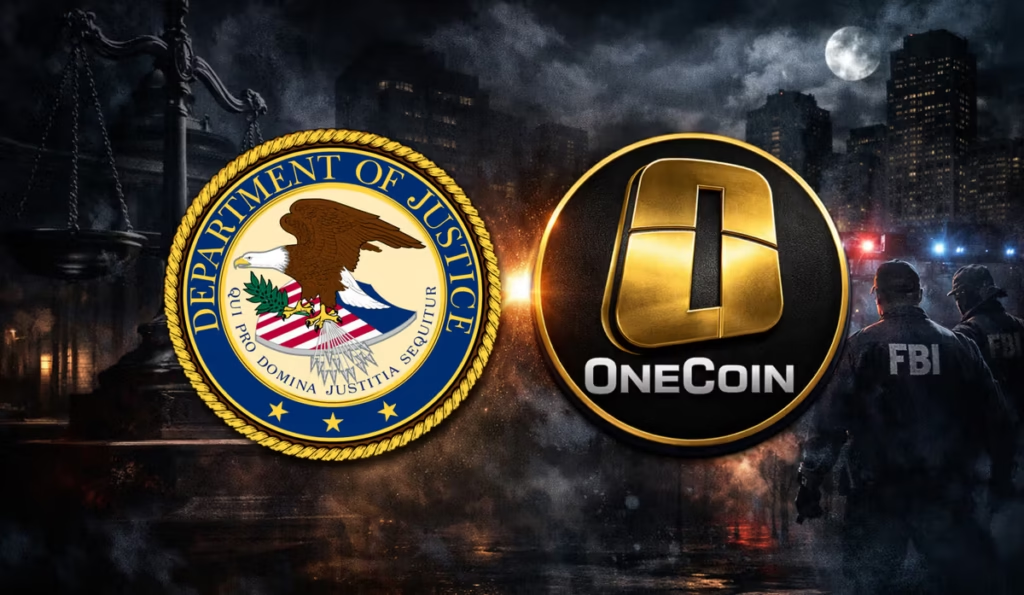
The global financial world has witnessed several high-profile fraud cases over the past decade, but few have reached the scale and impact of the OneCoin scandal. Now, a major development has emerged as authorities move forward with victim recovery efforts.
The announcement that the DOJ Opens $40M Compensation Process has brought renewed hope for thousands of individuals who suffered financial losses in one of the largest crypto-related fraud schemes ever recorded. This initiative represents a structured effort to return recovered assets to victims through an official claims process managed under U.S. legal supervision.
This article provides a complete breakdown of the compensation process, background of the fraud case, eligibility requirements, legal framework, and what affected individuals can expect in the coming months.
We will also explore how the recovery system works, why asset distribution takes time, and what lessons can be learned from this landmark case.
Understanding the OneCoin Fraud Case
The Rise of OneCoin
OneCoin was marketed as a revolutionary digital currency project that promised high returns and global adoption. It attracted millions of participants worldwide through aggressive marketing campaigns, seminars, and referral-based incentives.
However, unlike legitimate blockchain-based assets, OneCoin lacked transparent infrastructure and verifiable blockchain records. Over time, investigations revealed that it operated as a fraudulent scheme rather than a real cryptocurrency ecosystem.
The Collapse and Investigation
Authorities across multiple countries began investigating after inconsistencies in the system became apparent. Eventually, law enforcement agencies uncovered evidence of large-scale deception involving billions of dollars in investor funds.
As legal proceedings advanced, several key individuals associated with the project faced charges, while assets linked to the scheme were seized by authorities.
DOJ’s Role in Asset Recovery
Enforcement and Asset Seizure
The U.S. Department of Justice (DOJ) has played a central role in identifying, freezing, and recovering assets linked to fraudulent operations. These recovered funds are often held in government-controlled accounts until courts determine how they should be distributed.
The current initiative, where the DOJ Opens $40M Compensation Process, represents one of the structured efforts to return seized funds to victims.
Why Compensation Takes Time
Asset recovery is a complex legal process involving:
- Cross-border financial tracing
- Verification of claimant identities
- Court approval for distribution
- Prevention of duplicate or fraudulent claims
Because of these requirements, compensation programs often take years before payouts begin.
DOJ Opens $40M Compensation Process Overview
The official program titled DOJ Opens $40M Compensation Process is designed to provide restitution to verified victims of the OneCoin scheme.
This process ensures that recovered funds are distributed fairly and transparently under court supervision.
Key Objectives of the Program
- Identify legitimate victims of the fraud
- Validate financial loss documentation
- Ensure fair distribution of recovered funds
- Maintain transparency in the payout system
- Prevent fraudulent claims
The program reflects a broader commitment by authorities to restore financial justice in large-scale fraud cases.
How the Compensation Process Works
Step 1: Claim Submission
Victims are required to submit detailed documentation showing their involvement in the scheme and the extent of financial losses.
This may include:
- Investment records
- Payment receipts
- Transaction confirmations
- Communication evidence
Step 2: Verification Process
Once submitted, claims undergo strict verification to ensure authenticity. Authorities cross-check submitted data with financial records obtained during the investigation.
Step 3: Legal Review
A legal review team evaluates the claims and determines eligibility based on predefined criteria.
Step 4: Distribution Planning
After verification, funds from the DOJ Opens $40M Compensation Process pool are allocated proportionally among approved claimants.
Step 5: Payment Distribution
Approved victims receive compensation through secure financial channels.
Eligibility Criteria for Victims
Not every claimant may qualify for compensation. Eligibility is based on strict conditions:
- Proof of financial loss linked to OneCoin
- Verified participation in the scheme
- Submission within the official deadline
- Compliance with documentation requirements
The goal is to ensure that only genuine victims benefit from the recovery process.
Impact of the OneCoin Case on Global Financial Systems
Strengthening Regulatory Oversight
The OneCoin scandal has pushed regulators worldwide to tighten oversight on digital asset platforms. Governments are now more cautious about unregulated financial schemes.
Increased Investor Awareness
Investors have become more aware of:
- Risk management
- Due diligence
- Verification of financial platforms
Legal Precedents
The case has established important legal frameworks for handling cross-border financial fraud.
DOJ Opens $40M Compensation Process and Victim Expectations
The announcement that the DOJ Opens $40M Compensation Process has created cautious optimism among victims.
However, it is important to understand that:
- Compensation may not equal full losses
- Distribution depends on verified claims
- Payment timelines can vary significantly
Still, the process represents a meaningful step toward financial restitution.
Challenges in Compensation Distribution
1. Global Scale of Victims
OneCoin involved participants from multiple countries, making coordination complex.
2. Incomplete Documentation
Many victims may lack proper transaction records, complicating verification.
3. Legal Coordination
Multiple jurisdictions must align before funds can be released.
4. Fraudulent Claim Attempts
Authorities must filter out false claims to protect legitimate victims.
Related Keywords and SEO Terms
To better understand the topic, here are related keywords:
- OneCoin compensation program
- crypto fraud recovery process
- DOJ asset seizure fund
- victim restitution program
- financial fraud settlement
- digital currency scam case
- legal compensation claims system
- asset forfeiture distribution
- investor recovery initiative
- global fraud investigation
Importance of Asset Forfeiture Programs
Asset forfeiture programs like the DOJ Opens $40M Compensation Process play a critical role in financial justice systems.
They help:
- Recover stolen or misused funds
- Return money to victims
- Deter future fraudulent schemes
- Strengthen financial law enforcement
These programs also reinforce trust in legal institutions.
Global Reactions to the Compensation Program
Victim Communities
Many victims have expressed relief that recovery efforts are moving forward, although concerns remain about the final payout amounts.
Financial Experts
Experts view the initiative as a positive step but emphasize the importance of improving prevention mechanisms.
Legal Analysts
Legal analysts highlight the complexity of managing international fraud restitution cases.
Lessons Learned from the OneCoin Case
1. Importance of Verification
Always verify financial platforms before investing.
2. Risk Awareness
High-return promises often come with high risks.
3. Regulatory Compliance
Legitimate financial systems operate under strict oversight.
4. Investor Education
Better education can prevent future large-scale fraud cases.
Future of Crypto Fraud Recovery Systems
The success of initiatives like the DOJ Opens $40M Compensation Process may shape future recovery frameworks.
Expected improvements include:
- Faster verification systems
- Improved international cooperation
- Advanced blockchain tracking tools
- Stronger investor protection laws
What Victims Should Do Next
Victims are advised to:
- Monitor official DOJ announcements
- Gather all relevant documentation
- Submit claims within deadlines
- Avoid unofficial third-party services
Staying informed is crucial for successful participation in the process.
Conclusion
The launch of the DOJ Opens $40M Compensation Process marks a significant milestone in the ongoing effort to address one of the most notorious financial fraud cases in recent history.
While challenges remain, the structured compensation framework offers hope for victims seeking restitution. The process also highlights the importance of regulatory enforcement, investor awareness, and global cooperation in tackling financial crime.