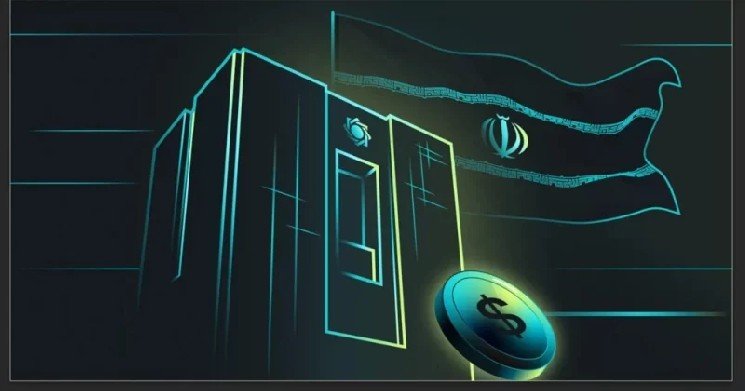
The landscape of digital asset compliance shifted markedly with the issuance of a critical regulatory warning. For professionals safeguarding the integrity of virtual currency platforms, the latest guidance from the United States Treasury Department represents a definitive statement on the convergence of geopolitical risk and blockchain technology. FinCEN’s IRGC alert is not merely an advisory; it is a detailed roadmap of how designated terrorist organizations exploit the speed and pseudo-anonymity of modern finance. The alert connects illicit oil shipments, intricate networks of front companies, and the increasing reliance on stablecoins to fund activities that threaten global stability. For Chief Compliance Officers, Anti-Money Laundering (AML) analysts, and blockchain forensics teams, the window for passive observation has closed. The expectations are clear: institutions must evolve from simple list-based screening to dynamic, typology-driven detection. This article provides a comprehensive, actionable framework for crypto compliance teams to align their operations with the rigorous demands set forth by this new directive, ensuring their platforms do not become conduits for malign activity.
Deconstructing the Core Typologies in FinCEN’s IRGC Alert
To mount an effective defense, one must first understand the sophistication of the attack. FinCEN’s IRGC alert lays bare a multi-layered machinery of evasion that goes far beyond simple peer-to-peer transfers. The Islamic Revolutionary Guard Corps (IRGC) has constructed a parallel financial ecosystem—often termed a “shadow banking” network—that mirrors legitimate commerce while hiding the true beneficiaries of massive commodity sales . The alert identifies four primary operational pillars: commodity smuggling, corporate opacity, professional facilitation, and digital asset manipulation. The IRGC relies heavily on a “shadow fleet” of aging vessels that transport oil to buyers, often small independent “teapot” refineries in East Asia. To obscure the Iranian origin, the oil is frequently blended with crude from other nations and relabeled with forged certificates, most notoriously passing Iranian crude off as “Malaysian blend” .
The financial layer is equally intricate. Proceeds from these oil sales do not flow directly back to Tehran. Instead, they are laundered through layers of exchange houses, general trading companies, and front firms, predominantly registered in United Arab Emirates free trade zones, with counterparties in Hong Kong and mainland China . Iranian financial entities establish “rahbar” companies—a Farsi term translating roughly to “leader” or “guide”—designed to manage international transactions without overt ties to the Iranian banking system. These entities are frequently capitalized from non-resident accounts held at Chinese financial institutions, moving large, round-dollar amounts to the UAE with no clear commercial justification. The alert makes it clear that banks and money services businesses with exposure to trade finance between these jurisdictions must now calibrate their models to detect these specific transactional vectors.
However, the most critical section of the alert for the virtual asset industry is the explicit acknowledgment that digital assets have become a primary leg of this shadow banking stool. Unlike traditional fiat channels, blockchain rails offer the IRGC near-instant settlement. The alert underscores that Iranian facilitators show a distinct preference for stablecoins due to their relative liquidity and exchange rate stability compared to volatile cryptocurrencies . This is not theoretical. FinCEN cites evidence of Iranian actors minting stablecoins, moving vast sums between high-volume issuers, and even creating proprietary digital currencies. The alert specifically references the designation of UK-registered exchanges Zedcex and Zedxion, which acted as front companies for IRGC-linked wallets, processing funds directly tied to terror financing . This demonstrates that the threat is not isolated to unhosted wallets in conflict zones; it has infiltrated ostensibly legitimate corporate registries in Western jurisdictions.
Operationalizing the Red Flags: A Blueprint for AML Teams
Translating strategic intelligence into operational controls is the primary challenge for compliance professionals. The alert enumerates fourteen specific red flag indicators across three domains. For a crypto compliance team, these cannot be viewed as mere suggestions but must be hard-coded into the logic of transaction monitoring systems. The days of relying solely on screening against the Specially Designated Nationals (SDN) list are over, as many of these IRGC facilitators are not yet listed individually . Instead, teams must pivot to “typology-led” monitoring, searching for clusters of behavior rather than just prohibited names.
The first category involves illicit commodities connections. Analysts should configure rules to flag petroleum, shipping, or trading companies transacting in digital assets. A legacy trading company that suddenly begins settling invoices in stablecoins, or receiving large deposits from unregistered peer-to-peer exchangers, is a glaring anomaly. Furthermore, onboarding files should screen for addresses linked to known “shadow fleet” vessel managers. While the physical shipping of oil and the digital movement of currency seem worlds apart, FinCEN has drawn a direct line between them. If a corporate client’s beneficial owner registers a domicile in a maritime jurisdiction like the Marshall Islands or Panama while operating out of the UAE and transacting with Asian petrochemical entities, enhanced due diligence (EDD) must be triggered immediately, looking specifically for ties to Iranian counterparties .
The second category focuses on shadow banking and front company structures. Crypto exchanges that service institutional or high-volume commercial clients must dissect corporate structures with surgical precision. The alert warns of newly incorporated Hong Kong entities with no web presence sharing a virtual office address and transmitting large, round-dollar or round-figure payments to UAE trading companies . Blockchain analytics firms like Chainallysis or Elliptic often map this, but the human analyst must overlay the corporate context. A critical step is the verification of “source of funds.” If a client provides proof of funds from a Hong Kong company, but that company’s bank account is actually a non-resident “rahbar” account located in mainland China, the funds are high-risk. Compliance teams must demand granularity, tracing funds back to the originator, not just the intermediary. The use of exchange houses as intermediaries—receiving fiat from one corporate entity and converting it to crypto for another—should be treated with extreme suspicion if it involves the UAE-Hong Kong corridor.
The third and most technically challenging category revolves around digital asset infrastructure. FinCEN explicitly warns about unregistered P2P exchangers, nested digital asset service providers, and Iran-located platforms . Compliance teams must adopt blockchain intelligence tools that go beyond simple address screening. They need to implement “peel chain” analysis to see if a customer’s wallet is a one-hop intermediary from a sanctioned Iranian exchange like Nobitex. Moreover, the alert addresses the abuse of stablecoins. Analysts must watch for unusual minting patterns—for example, a foreign trust company that rapidly increases its minting limit with a stablecoin issuer, only to distribute those tokens to wallets later identified as high-risk. The technical architecture of stablecoins, particularly those with freeze functions, now places a direct obligation on issuers to monitor for these patterns .
The Stablecoin Focus: Why Digital Dollar Risk Spikes
The emphasis on stablecoins within FinCEN’s IRGC alert represents a significant evolution in enforcement logic. While Bitcoin offers volatility that complicates treasury management for a regime, dollar-pegged assets like USDT or USDC offer the “relative liquidity, ease of settlement, and exchange rate stability” cited as key attractors for the IRGC . For a network that needs to pay for weapons components or logistics immediately, fiat-pegged digital assets are the perfect settlement layer. The alert describes Iranian facilitators engaging in minting, moving funds between large-volume issuers, and creating proprietary stablecoins, such as the USDZ token associated with the sanctioned Zedxion ecosystem .
This reality fundamentally changes the risk profile of stablecoin transactions. Previously, a compliance team might view a high-volume USDC transfer between two institutional counterparties as lower risk than a Monero or privacy-coin transaction. The alert invalidates that assumption. Compliance teams must now apply the same level of source-of-funds scrutiny to stablecoin flows as they would to fiat wires. The logic is straightforward: if the IRGC prefers stablecoins, then stablecoin transactions require heightened scrutiny. The alert suggests that Iranian actors view the stablecoin ecosystem as an alternative correspondent banking network. Crypto platforms that operate as fiat on/off-ramps must treat fiat-to-stablecoin conversion requests from trading companies in high-risk zones as a primary red flag.
The enforcement history leading up to the alert provides concrete context. The massive settlement with Binance and, more recently, the $3.1 million penalty against Exodus Movement for 254 apparent violations of Iranian sanctions, highlight the liability of software and wallet providers . In the Exodus case, the company was penalized not just for failing to block users, but because its staff recommended that users employ Virtual Private Networks (VPNs) to bypass geo-blocks imposed by partner exchanges . For stablecoin issuers and wallet providers, this is a cautionary tale. If a customer service representative advises a user to circumvent an IP block to access a stablecoin feature, that is not a mere policy violation; it is an egregious sanctions evasion act in the eyes of the Office of Foreign Assets Control (OFAC). Compliance protocols must therefore cover support tickets, Discord channels, and community management teams, ensuring no guidance is ever given that facilitates the masking of jurisdictional origin.
Proactive Remediation: Redesigning Your Control Framework
Responding to FinCEN’s IRGC alert requires a “look-back” and a “look-forward” strategy. The immediate reaction should be a retrospective risk assessment. Compliance teams must conduct a historical sweep, looking for the specific SAR reference key “FIN-2026-Alert002” patterns in past transactions . This involves querying the transaction monitoring system for companies linked to petroleum or shipping, and specifically cross-referencing users who logged in from Iranian IP addresses or those proxied via Tor exit nodes but who presented KYC documents from Asia or the Gulf. If this historic review uncovers suspicious activity that was previously unreported, a decision must be made regarding a voluntary self-disclosure to OFAC, as failure to disclose known violations is a significant aggravating factor in enforcement actions .
The forward-looking remediation centers on the recalibration of the risk appetite statement. Senior management must sign off on new rules that may restrict business in high-growth corridors like the UAE and Hong Kong. This is not a technical decision; it is a strategic governance mandate. Management commitment is a fundamental pillar of an adequate compliance program, as emphasized repeatedly in OFAC’s framework . The board must understand that allowing shell company activity is an existential risk. The compliance department must be empowered to reject applications from general trading companies with opaque ownership chains, even if they promise high trading volumes.
Specific control enhancements must include the integration of “geolocation” data beyond basic IP blocking. Exodus and ShapeShift settlements taught the industry that IP addresses are critical data points that must be screened . Modern compliance suites now offer “improbable login” detection. If a user authenticated through a UAE corporate VPN but their device time zone or language settings are consistently set to Tehran, the system must flag this for manual review. Furthermore, identity verification must move beyond static documents. For corporate accounts, obtaining notarized affidavits of beneficial ownership and cross-referencing these against shipping registries (such as IMO numbers for vessel operators) is necessary.
Training is the final critical pillar. The Exodus case highlighted that sophisticated Terms of Use are useless if staff are not trained to enforce them . Crypto compliance teams must run scenario-based training specifically on the IRGC typologies. Analysts need to learn what a “Malaysian blend” bill of lading looks like, why a Hong Kong-registered company using a non-resident Chinese account is suspicious, and how “nested service” works in the context of a decentralized exchange. The entire frontline staff, from the instant chat support to the institutional sales team, must understand that circumvention advice—even suggesting a VPN to a “user who is stuck”—is a terminable and potentially criminal offense.
Conclusion
The issuance of FinCEN’s IRGC alert serves as a decisive moment of convergence between national security priorities and the operational realities of the digital asset industry. The alert dismantles the illusion that crypto markets exist in a vacuum, separate from the physical geopolitics of oil and maritime trade. By mapping the financial architecture of the IRGC’s shadow fleet and its intricate stablecoin laundering loops, the Treasury has provided the private sector with the typologies necessary to detect and disrupt terrorist finance. The path forward for crypto compliance teams is not merely about avoiding fines; it is about protecting the integrity of the blockchain. This requires an immediate pivot to a risk-based, behavior-driven monitoring standard that views stablecoin flows with the same scrutiny as traditional wire transfers. The industry must harden its defenses by integrating maritime shipping data, dissecting front company registries, and enforcing rigid geo-controls. The alert offers a blueprint for good actors to differentiate themselves. By adopting these enhanced standards, the virtual asset ecosystem can mature into a safer, more transparent pillar of the global financial system, denying malign networks the digital cover they seek.