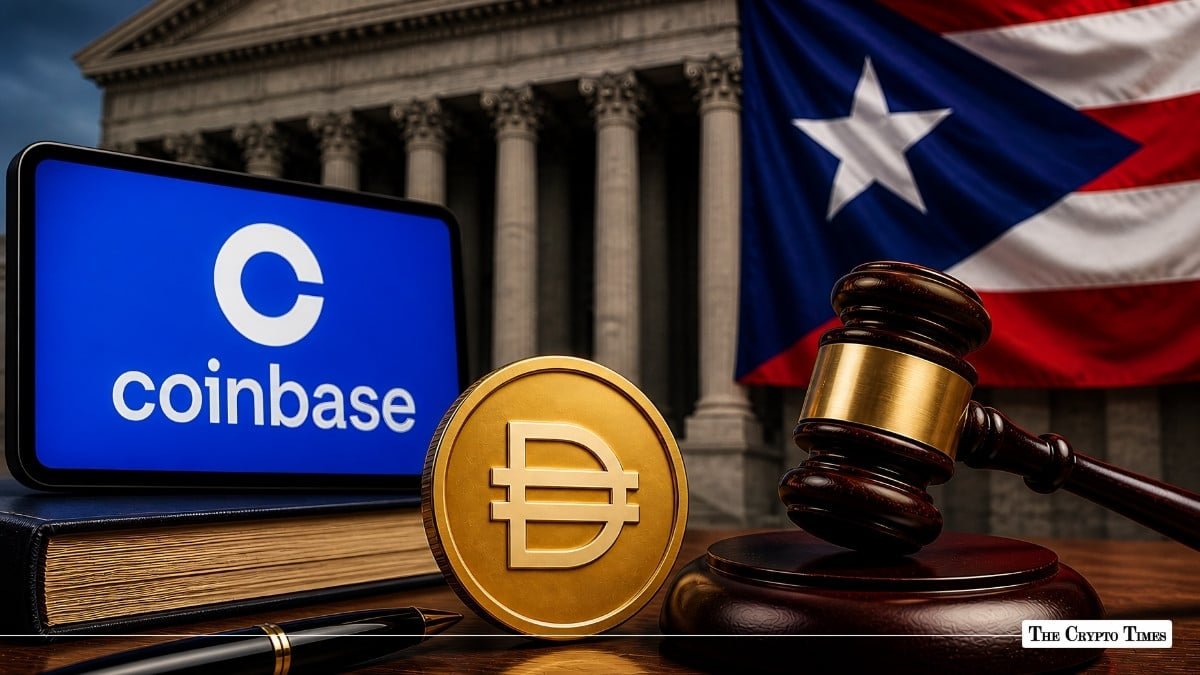
A new legal fight has brought fresh attention to how crypto exchanges handle stolen digital assets. In the reported case, a Puerto Rico-based crypto investor sued Coinbase, saying the exchange would not release funds that were allegedly taken in a 2024 phishing attack. Reporting says the stolen assets were traced to a Coinbase account, and the plaintiff claims the exchange froze the funds but did not return them. The victim is said to have lost more than $55 million in DAI during the attack.
That is why Return Stolen DAI has become such a powerful phrase around this story. It captures both the technical side of the dispute and the emotional side. On one side is a victim who believes the trail is clear. On the other side is an exchange that appears to be asking for a legal process before it releases anything. The clash is not just about one account or one theft. It is about what responsibility a centralized platform has when suspicious assets land on it.
DAI itself is a stablecoin on the Ethereum network designed to hold close to one U.S. dollar in value, and it is maintained through a decentralized system rather than a single issuer controlling every step. That makes it widely used, but it also means stolen funds can move quickly across wallets, services, and chains if a criminal gets access early enough.
Why this case matters beyond one lawsuit
This dispute matters because it sits at the center of a question many people in digital finance quietly worry about: what happens after the theft is already over? For most users, the frightening moment is not only the scam itself. It is the period after the scam, when they realize the assets are gone, the attacker has moved fast, and every next step feels like a race against time.
The situation also exposes a trust problem. Crypto was built around the idea of direct control, but in practice many users still rely on exchanges for storage, transfer, and recovery support. When money passes through a centralized platform, the platform can freeze, flag, or restrict movement. That can help prevent further damage. But it can also create conflict when the rightful owner wants immediate release and the platform wants documentation, court orders, or law-enforcement involvement first.
That tension is what makes Return Stolen DAI more than a catchy phrase. It has become a shorthand for the larger struggle between user expectations and platform procedure. Users expect justice to be fast. Platforms often move slowly because they must protect themselves from releasing assets to the wrong party. The gap between those two expectations is where many disputes begin.
For victims, the issue is deeply personal. A stolen balance is not an abstract number on a screen. It may represent savings, business capital, family support, or years of careful planning. When a platform appears unwilling to help, frustration grows quickly. For exchanges, the risk goes the other direction: acting too quickly can create legal exposure, compliance problems, and irreversible mistakes.
This is why a single case can influence so much more than the parties named in the complaint. It may affect how victims report theft, how exchanges build recovery procedures, how tracing firms document evidence, and how users think about custody in general. Even people who never touched DAI may see the case as a warning about what can happen when speed, security, and proof do not line up neatly.
The alleged theft and the road to the exchange
Every major crypto recovery story begins with two timelines running at the same time. The first is the attacker’s timeline. The attacker moves fast, shifts assets, splits them into smaller pieces, and tries to hide the trail. The second is the victim’s timeline. The victim notices the loss, gathers records, contacts support teams, and tries to prove ownership.
In this case, reporting says the victim lost DAI in a phishing attack and later traced the funds to a Coinbase account. That detail is important because it changes the shape of the dispute. It suggests the assets were not simply lost into a dark corner of the blockchain. Instead, they allegedly appeared inside a platform that could identify, hold, and potentially restrict them. Once that happens, the question becomes whether the exchange should simply freeze the funds, or whether it should go further and hand them back.
The word “traced” sounds simple, but in practice it can mean a long trail of wallet analysis, transaction mapping, clustering, and timing comparisons. A victim may hire specialists to follow the money across wallets and services. Those specialists may conclude that the funds reached a known exchange account. But an exchange can still ask for more proof before doing anything permanent. It may want formal legal papers, identity verification, or a court directive.
That is one reason recovery disputes become so difficult. Blockchain evidence can be persuasive, but persuasion is not the same as authorization. A company may believe the story while still refusing to release money without the right process. From the victim’s side, this can feel like stonewalling. From the exchange’s side, it can feel like risk management.
This is also where the phrase Return Stolen DAI becomes emotionally loaded. To the victim, the phrase says the answer should be obvious. To the exchange, the same phrase may oversimplify a legal and compliance problem that is not easy to solve with good intentions alone.
Why stablecoins make recovery both easier and harder
Stablecoins are often seen as the practical part of crypto. They are used for trading, transfers, savings, and quick settlement. DAI is one of the best-known examples, and it is built to hold value near the U.S. dollar through a smart-contract system rather than through a single traditional custodian. That design can make DAI useful across many markets. It also means the asset can move fast and remain highly liquid.
That speed is a double-edged sword. On one hand, it helps honest users transfer funds efficiently. On the other hand, it helps thieves move value quickly before alarms go off. A phishing attack that captures wallet access can be especially harmful because the attacker may be able to transfer immediately, long before the victim realizes the account is compromised.
Stablecoins also create a perception problem. Many users think of them as “safer” than more volatile assets because the value is more predictable. But that does not mean the storage or transfer process is safer. The real risk often comes from access, not price movement. Once a thief controls the keys or a signed approval, the stable nature of the asset does not protect the owner at all.
In the Coinbase dispute, this matters because the asset allegedly remained identifiable after the theft. A stablecoin can be easier to trace in a practical sense because the victim knows the value being pursued and the transaction history can be tracked on-chain. Yet the same liquidity that makes tracing possible also makes movement fast. Assets can change hands many times before a response lands.
That is why the question is not just whether the assets were found. It is whether the recovery path can keep up with how quickly the system itself moves. Return Stolen DAI is, in that sense, a symbol of the wider problem: the technology can reveal movement, but legal and operational systems still have to decide what to do with that information.
The exchange dilemma: frozen is not the same as returned
A lot of people assume that once an exchange freezes suspicious funds, the hardest part is over. In reality, freezing is only one part of the problem. Freezing means the asset is paused. Returning means ownership has been confirmed, liability is understood, and the platform is comfortable handing control to a claimant.
That distinction is central to almost every dispute like this one. An exchange may freeze an account because the activity looks suspicious or because it wants to prevent further movement. But returning the funds is a different act entirely. It can require internal review, legal review, compliance review, and sometimes court involvement. If the exchange gets it wrong, the consequences can be serious.
From the user’s perspective, a freeze without a return can feel incomplete. The victim sees the assets sitting somewhere known and asks why they cannot simply be sent back. From the exchange’s perspective, however, a freeze may be the safest move while ownership is still contested or documentation is incomplete.
This is where many high-stakes disputes become frustrating. Both sides may think they are being reasonable. The victim believes the evidence is clear. The platform believes it must follow process. Neither side necessarily trusts the other’s judgment. The result is a stalemate that can last a very long time.
The lesson for ordinary users is painful but important: recovery is never guaranteed, even when the trail looks strong. A frozen balance is not a victory by itself. It is only one checkpoint in a longer process. The presence of a known exchange does not automatically mean the funds will come home quickly.
That is why people following the case have paid so much attention to the idea behind Return Stolen DAI. The phrase sounds straightforward, but the reality is a chain of practical hurdles. First the funds must be found. Then they must be preserved. Then ownership must be established. Then the platform must be willing and able to release them. Any one of those steps can slow everything down.
What victims often misunderstand after a theft
When someone loses digital assets, their first instinct is usually to focus on the money. That is understandable. But recovery is rarely just about money. It is about documentation, identity, chain of custody, and timing. The more organized the victim’s evidence is, the better the chance of moving the case forward.
One common mistake is assuming that a blockchain trace automatically settles ownership. It does not. A trace can be powerful evidence, but it is still evidence. It may support a claim, yet it does not replace the legal or internal rules an exchange uses when handling disputed assets.
Another common mistake is waiting too long to act. In crypto cases, speed matters. Screenshots, transaction hashes, support tickets, device logs, email records, and authentication details all matter. If these are lost or scattered, the victim’s case becomes harder to prove.
A third mistake is focusing only on technical tracing and ignoring the paper trail. A recovery specialist may identify wallet clusters and exchange addresses, but the exchange will usually care about identity verification, account history, suspicious login activity, and proof that the claimant is the rightful owner. Technical clarity helps, but it is not the entire case.
This is one reason why Return Stolen DAI resonates with so many people. It is a phrase that sounds like a moral claim, not just a technical one. Yet in real life, moral clarity and procedural clarity are not always aligned. A person can be clearly harmed and still struggle to persuade an exchange to move without a formal process.
For users, the practical lesson is simple: treat any theft as both a security incident and a record-keeping emergency. The faster the evidence is preserved, the stronger the recovery case becomes.
What exchanges worry about when they receive flagged funds
From the outside, an exchange can look like a powerful gatekeeper. In reality, it is often operating under pressure from several directions at once. It must think about security, compliance, fraud prevention, customer disputes, and legal exposure. When a transfer is linked to a theft claim, the exchange has to ask uncomfortable questions.
Is the claimant the real owner? Is there more than one person making a claim? Could the funds be subject to a law-enforcement request? Could releasing them create liability if the wrong person receives them? Could the exchange be drawn into a broader dispute later?
These questions slow everything down, but they exist for a reason. A platform that returns funds too quickly may send assets to the wrong person. A platform that holds them too long may anger the rightful owner. There is rarely a perfect answer.
The biggest tension comes from the fact that exchanges are expected to act like both technology companies and financial institutions. Users want speed, transparency, and sympathy. Regulators and legal teams want caution, process, and defensible decisions. Those two expectations can clash hard when real money is involved.
That is why the public often misreads these situations. People see a frozen account and think the exchange is just being difficult. Sometimes that may feel true from the customer’s side. But the internal reality is usually more complicated. The exchange may be trying to avoid returning funds that are under dispute, or it may be waiting for a proper legal order before taking irreversible action.
In the context of Return Stolen DAI, this means the exchange’s silence or slowness does not automatically prove bad faith. It may simply show that the platform is choosing caution over convenience. That is not satisfying for a victim, but it is often how large financial platforms behave when ownership is contested.
Why the phrase Return Stolen DAI matters as a signal
Some SEO phrases are just keywords. Others reveal a larger fear or expectation. Return Stolen DAI does both. It reflects the immediate claim in the lawsuit, and it also reflects a much wider public concern: can digital assets be recovered once they move into the wrong hands?
That question matters because crypto users often hear two very different stories. One story says blockchain is transparent and theft can be traced. The other says theft is nearly impossible to reverse. The truth sits somewhere in the middle. Tracing can be powerful, but recovery still depends on institutions, timing, and cooperation.
The phrase also shows how much people expect centralized exchanges to act as safety nets. Even in a decentralized ecosystem, users often lean on centralized services when things go wrong. They want support staff, account controls, and a path back to normal. That expectation is not unreasonable. But it does create a mismatch between the ideals of self-custody and the reality of platform dependency.
There is also a reputational angle. When a well-known exchange is named in a recovery dispute, users start asking how similar disputes would be handled elsewhere. That can influence trust, brand perception, and customer behavior. A single lawsuit can change how cautious people feel when deciding where to keep assets.
From a broader market view, cases like this encourage more discussion about account security, scam education, multi-layer verification, and stronger incident response. They also remind users that a stablecoin is not automatically a safe coin. The safety question is not just about price. It is about control, access, and response.
That is why the phrase has traveled so quickly. It is short, emotional, and easy to remember. But behind it is a serious question with no easy answer.
Practical lessons for everyday crypto users
Even if someone never faces a lawsuit, there are still lessons to draw from this dispute. The most obvious one is that account security should never be treated as optional. Phishing attacks remain one of the easiest ways for attackers to get in because they target people, not code.
Users should treat every login page, support email, direct message, and verification prompt with caution. If a request feels urgent, that is often the first sign that it needs more scrutiny. Attackers rely on pressure, confusion, and speed. Slowing down can prevent huge losses.
It is also wise to separate storage habits. Keeping everything in one place may feel convenient, but it can create a single point of failure. Many users benefit from using different security practices for different types of funds. High-risk habits and high-value balances do not mix well.
Record keeping matters too. When something goes wrong, a clean timeline helps. The date of the first suspicious message, the wallet address involved, the transaction hashes, the support contacts, and the response times can all matter later. People often think they will remember these details. They usually do not.
The final lesson is psychological. After a theft, people often want instant certainty. They want to know whether the money is gone forever or coming back. The truth is often slower and messier. Recovery can take time, and success is never guaranteed.
That is why the message behind Return Stolen DAI should be read carefully. It is not just about one case. It is a reminder that users must protect access before a loss happens, not just hope for rescue afterward.
What this case may mean for the wider crypto industry
The crypto industry often talks about innovation, speed, and efficiency. Cases like this force the industry to talk about something else: responsibility. When value moves on-chain, the system may be efficient, but the human side of the system still has to answer hard questions.
One likely effect of disputes like this is more caution around support workflows. Exchanges may strengthen their internal rules for handling frozen assets, proving ownership, and dealing with theft claims. That can be good for safety, but it may also slow ordinary recovery requests.
Another likely effect is greater use of tracing firms and incident-response specialists. As the industry matures, more victims may seek professional help the moment a theft occurs. That can improve evidence quality and may reduce the chance of delays that weaken a claim.
The case may also shape user expectations. Many people assume that because blockchain records are public, recovery should be almost automatic. This dispute shows that public visibility is not the same as automatic restitution. Proof still has to move through legal, operational, and compliance channels.
For the broader market, these stories are important because they reveal the gap between technological promise and practical protection. Crypto can be fast, borderless, and programmable. But when theft happens, the recovery path can still look very old-fashioned: documentation, verification, and formal claims.
So, while Return Stolen DAI may sound like a narrow demand, it is really a test case for the industry. It asks whether crypto platforms can be both innovative and accountable. It asks whether victims can be helped without creating new risks. And it asks whether trust can be rebuilt after a theft has already crossed the line from code to court.
Related reading: DAI (cryptocurrency) on Wikipedia.
Final thoughts
A case like this is never only about one victim, one exchange, or one stablecoin. It is about the rules people expect when digital money collides with real-world harm. The phrase Return Stolen DAI captures a demand for fairness, but the dispute shows how fairness is filtered through evidence, process, and legal caution.
For users, the takeaway is to protect access, document everything, and act fast after any suspicious activity. For exchanges, the takeaway is that slow responses can damage trust, even when caution is justified. For the industry, the takeaway is bigger: recovery tools, support standards, and dispute handling need to grow up as fast as the technology itself.